
More Than a Good Listener
Studies have consistently shown that the presence of a trained facility or therapy dog can have a measurable impact on children participating in therapeutic services. Research indicates that interactions with dogs can help reduce stress, lower anxiety, and create a greater sense of emotional safety. For children who have experienced trauma, these effects can be especially important. Trauma often affects a child's ability to trust others, regulate emotions, and discuss difficult experiences. The presence of a calm, trained dog can help bridge those gaps and make the therapeutic process feel less intimidating.
This month, Polar continued expanding his role at the child advocacy center, by participating in therapy sessions alongside children receiving services.
While Polar is not a therapist, he can serve as a valuable support tool within the therapeutic environment. Children who have experienced abuse, neglect, or other traumatic events are often asked to discuss deeply personal experiences with adults they may not know well. Even in the most supportive setting, that can be difficult.
A facility dog changes the dynamic of the room.
When Polar is present, children have something familiar and comforting to focus on. They may pet him while they talk, sit beside him during difficult conversations, or simply draw comfort from having him nearby. Therapists often find that children who are anxious or reluctant to engage become more relaxed when a facility dog is present.
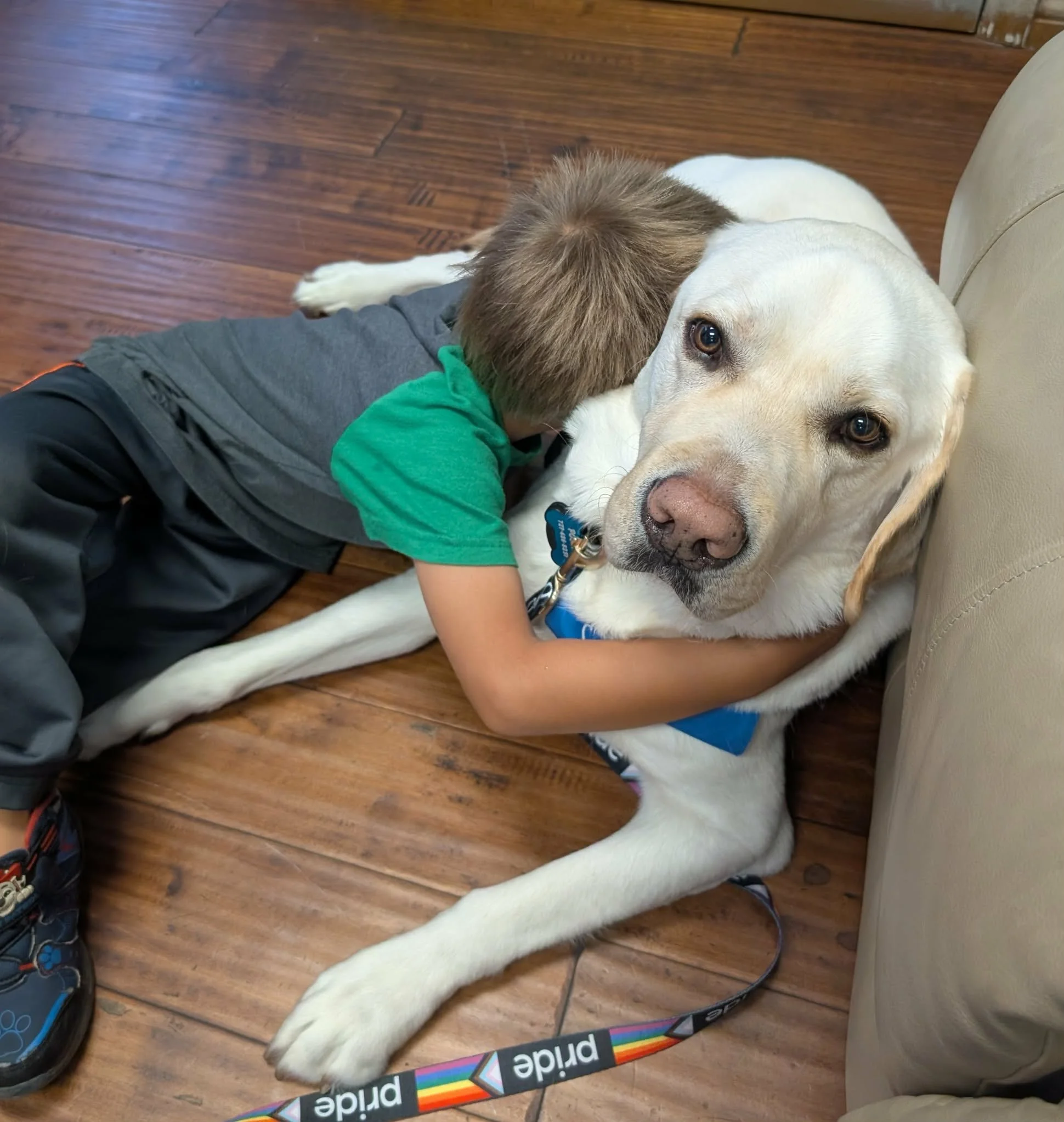
In some cases, children will speak directly to Polar. Rather than answering a therapist's question, they may tell Polar how they are feeling or explain something that happened to them while looking at him instead of an adult. This can make it easier for children to discuss difficult subjects because they feel less pressure and less fear of being judged.
Research has also suggested that animal-assisted interventions can help increase participation in therapy, strengthen rapport, and support emotional regulation during treatment. For children working through trauma, creating an environment where they feel safe enough to communicate is often one of the first and most important steps toward healing.
At the child advocacy center, Polar's role is to help create that environment. By providing comfort, consistency, and a calming presence, he helps support the work being done by therapists and advocates every day.
We are grateful for the opportunity to continue expanding Polar's involvement in services and to partner with the dedicated professionals at Pasco Kids First who work tirelessly to help children process trauma, build resilience, and move forward.