
Behind the Recovery: Polar Visits FDLE for Forensic Science Week
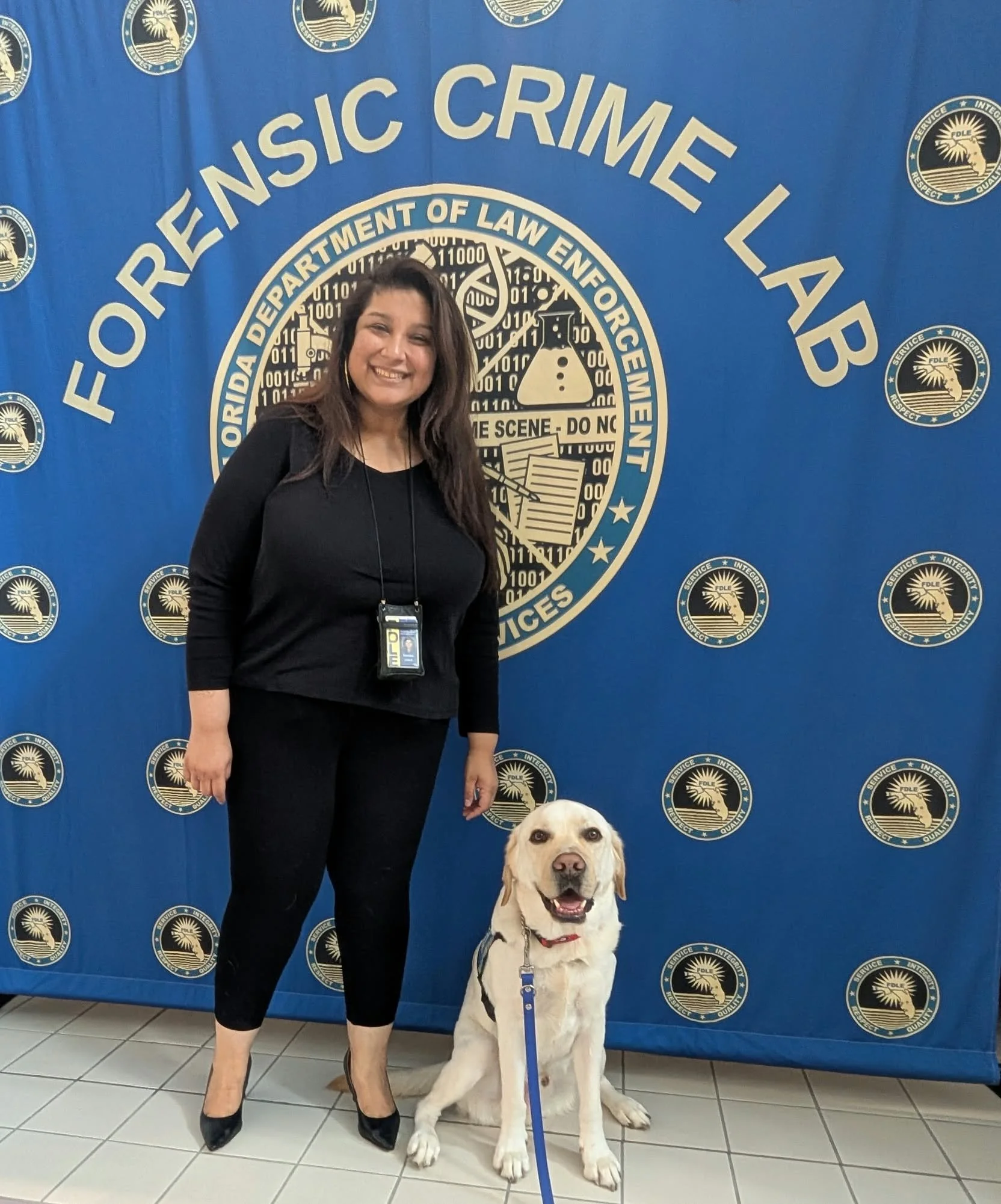
When Polar walks into a child recovery operation, his job is pretty straightforward: be there for the child. He doesn’t need to know how investigators found them, what evidence led law enforcement to their location, or how many agencies and professionals worked behind the scenes to bring them to safety. He just needs to be ready when they arrive.
Recently, Team Polar had the opportunity to see a little more of that other side of the work when we visited the Florida Department of Law Enforcement (FDLE) during Forensic Science Week.
Over the past year, Hero to a Child and Polar have had the privilege of working alongside FDLE and many other local, state, and federal partners during two major child recovery initiatives: Operation Home for the Holidays in 2025 and Operation Statewide Shield in August 2026.
Operation Home for the Holidays resulted in 122 missing children being located or safely recovered. Operation Statewide Shield, Florida’s first state-led statewide child recovery initiative, recovered 163 missing and endangered children ranging in age from two months to 17 years old.
During those operations, our role begins largely where the recovery itself ends. Polar is there for the child who arrives exhausted after an incredibly long day. These children are scared, they don’t know what is going to happen next, and providing them with a quiet companion to sit beside them while adults ask questions, make phone calls, conduct assessments, and figure out the next safe place for them to go provides them with a safe space in such an unnerving environment.
Being able to provide that comfort is an incredible privilege.
But visiting FDLE during Forensic Science Week gave us the opportunity to step behind the curtain and learn more about what happens before we meet these children.
So Much More Happens Behind the Scenes
We learned more about the Strike Team personnel who work these operations in the field, but we also got a closer look at the forensic professionals whose work can support complex criminal investigations.
There are Digital Evidence analysts, who use specialized tools to recover information from cell phones, computers, gaming consoles and other electronic devices. That evidence can include messages, call records, browser history, location information, deleted data, surveillance footage and more. In cases involving the exploitation of children, where so much communication and activity can occur electronically, that work can provide investigators with critical information.
There are Biology and DNA analysts, who examine evidence for biological material and develop DNA profiles that can help investigators link individuals to evidence or exclude them as a possible source.
Friction Ridge analysts work with latent fingerprints and palm prints, using highly specialized techniques to detect, preserve, compare and sometimes identify prints recovered from evidence.
Depending on the circumstances of a case, the work can also involve forensic document examiners, toxicologists, trace evidence analysts, crime scene professionals and other specialists within FDLE’s forensic services.
And those are only pieces of a much larger puzzle.
A child recovery operation can involve investigators, law enforcement officers, forensic specialists, victim advocates, medical professionals, behavioral health providers, child welfare professionals, prosecutors, placement teams, community organizations and countless others, sometimes working across jurisdictions and even state lines.
From our little corner of an operation, it can be easy to see the moment a child walks through the door and forget just how much work may have taken place to get them there.
Forensic Science Week gave us a chance to see some of it.
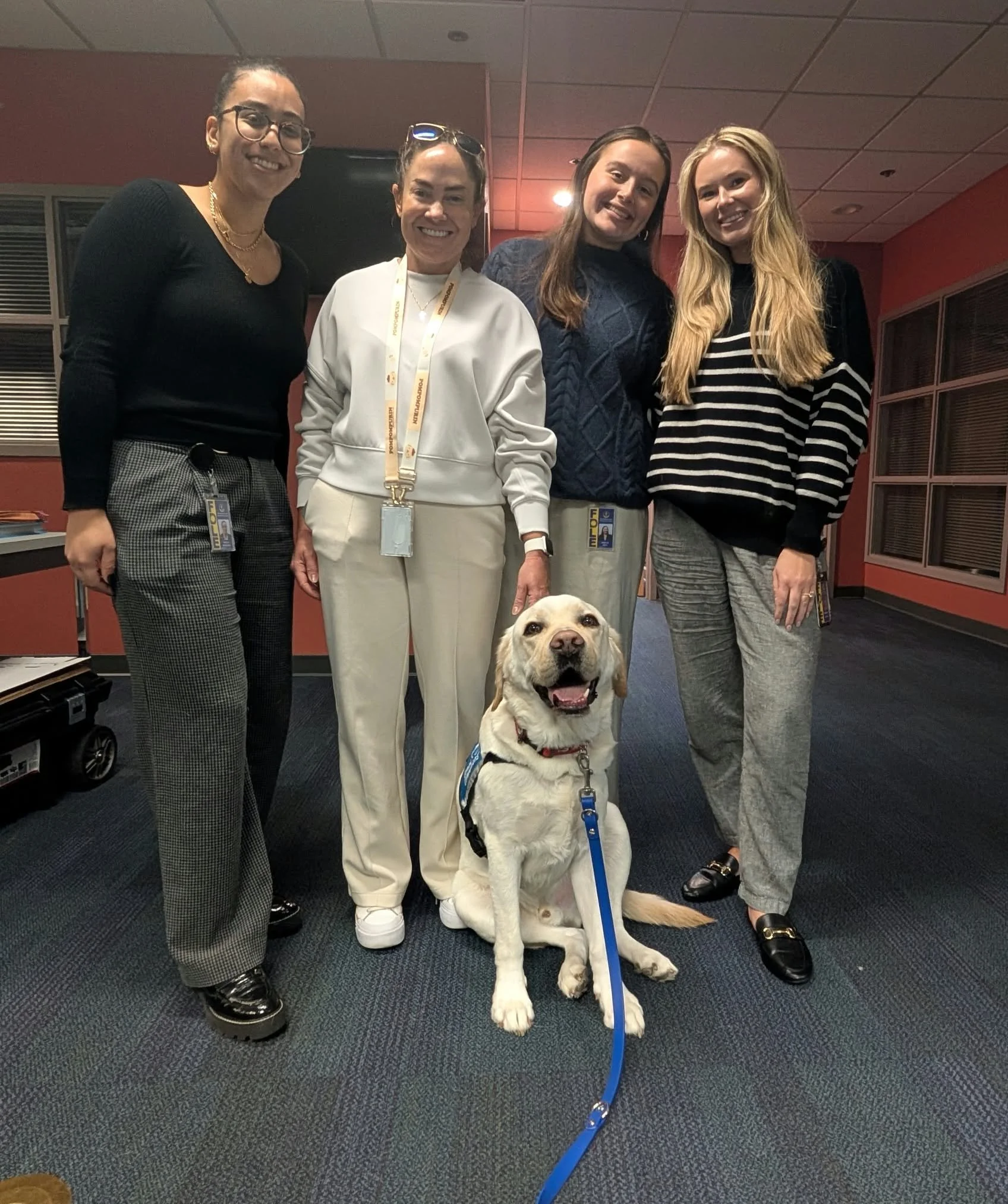
Different Roles. One Mission.
There was something especially meaningful about visiting FDLE after having worked alongside their team during these operations. We know what our piece looks like. Our visit reminded us that while Polar may be there for those moments, an extraordinary amount of work has already happened before he ever gets the opportunity to do his job.
We are incredibly grateful to FDLE for welcoming us during Forensic Science Week, for giving us a glimpse behind the scenes, and especially for allowing Hero to a Child to be part of these collaborative efforts. But underneath the fun was something we walked away appreciating even more than before:
Child recovery is not one moment, one agency, one profession, or one person. It is an enormous team of people bringing very different skills to the same mission: find our kids, bring them to safety, and make sure someone is there for them when they arrive. 💙🐾